


Every homeschool parent has a favorite part of the school day. Ever since I started homeschooling, mine has been this– teaching my kids to read, and enjoying great books together.
Teaching a child to read is no small feat. So much of life rests on this one foundational skill. But there’s something about watching a child learn to manipulate letters and sounds, piece single letters into a word, then string those words into a sentence. And sentences become pages, and pages become chapters.
Letter by letter, word by word, reading happens. It’s amazing to see!
As I’ve added more of my children to our learning time over the years, I’ve realized how much of our day is devoted to reading — whether it’s direct phonics instruction, a math story problem, a history read-aloud, a recipe, or a classic chapter book we’re sharing.
Reading is taking place.
I’m a former first grade teacher, who’s main role was to teach my students how to read, and now a homeschooling mom of five. I’m no expert, but I have found ways to weave both the love of reading and the practice of it into our everyday life.
On any given school day, my kids and I read in three different ways. These three ways have built the groundwork for our learning and shaped how we feel about literature. Whether you homeschool or just read with your kids in the hours they’re home, I hope this post is helpful!
1. Listen to Reading
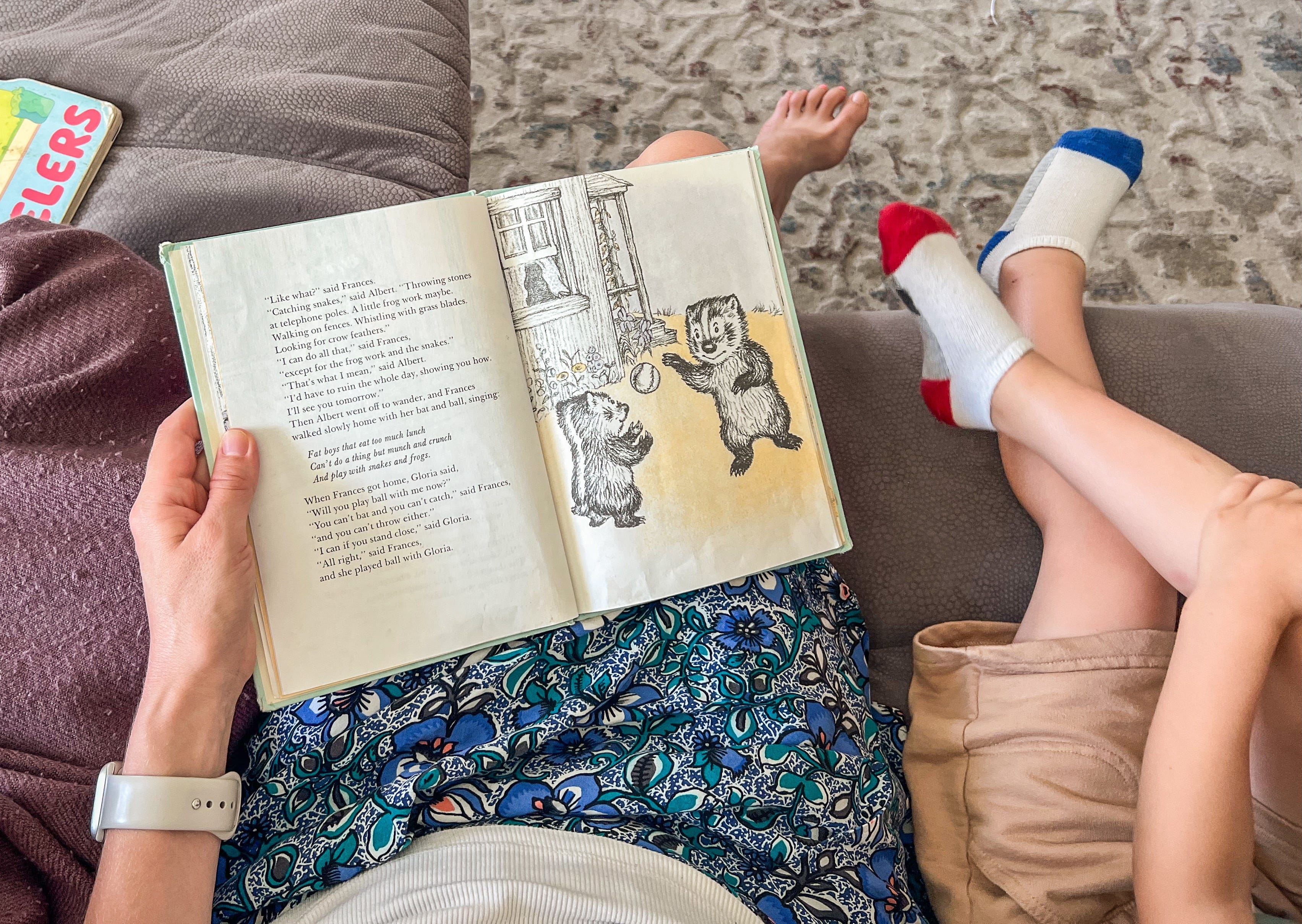
This is the first and most influential way to introduce young kids to reading. As soon as possible, start reading books aloud. In our home, we do this in a few different ways, from birth onward.
We always have a chapter book that I read aloud throughout the day. Right now it’s Charlie and the Chocolate Factory — just a chapter or two at a time, tucked between the other parts of our day.
We also have a Morning Basket. Every day around 10am we take a break from math and reading lessons and meet at the kitchen table. The kids eat a snack while I read from our Bible time choices plus a handful of other good resources. At the moment it’s Favorite Nursery Rhymes From Mother Goose (one of our most-read books of the last decade), The Children’s Book of Virtues, our current chapter book, some recitation (we’re memorizing The Lord’s Prayer), and whatever other children’s book fits the season.
Other times of day, I pull books from the baskets and shelves around the house and sit on the couch with a child or two. I read, they listen. It doesn’t matter whether it’s a chapter book with words they can’t read yet or a simple picture book they’ve heard for years — the meaning behind it stays the same.
When kids listen to good literature, they get a meaningful experience of making connections, drawing conclusions, and hearing someone else’s perspective. If you want your children to enjoy reading later in life, start here!


2. Read Together
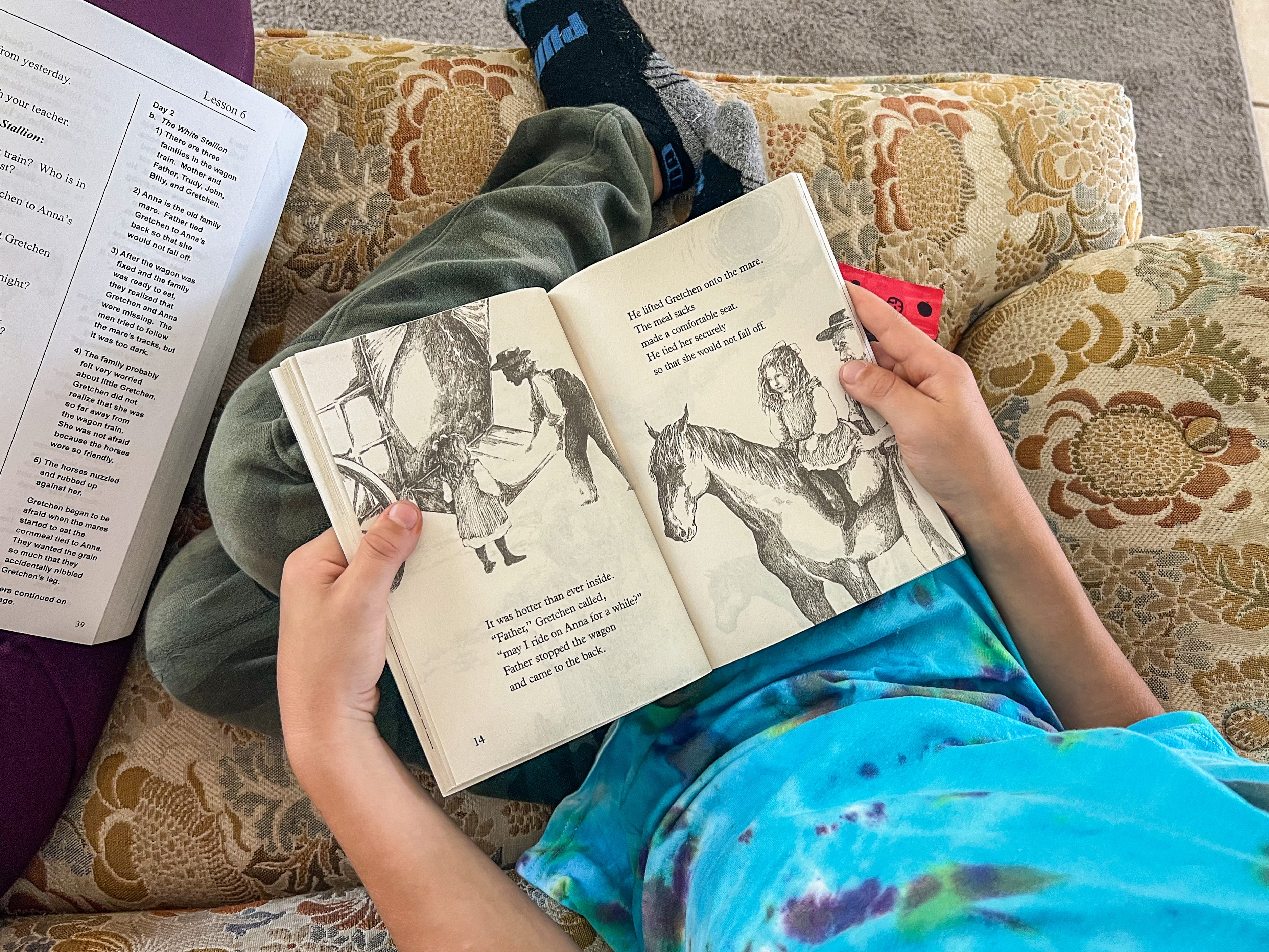
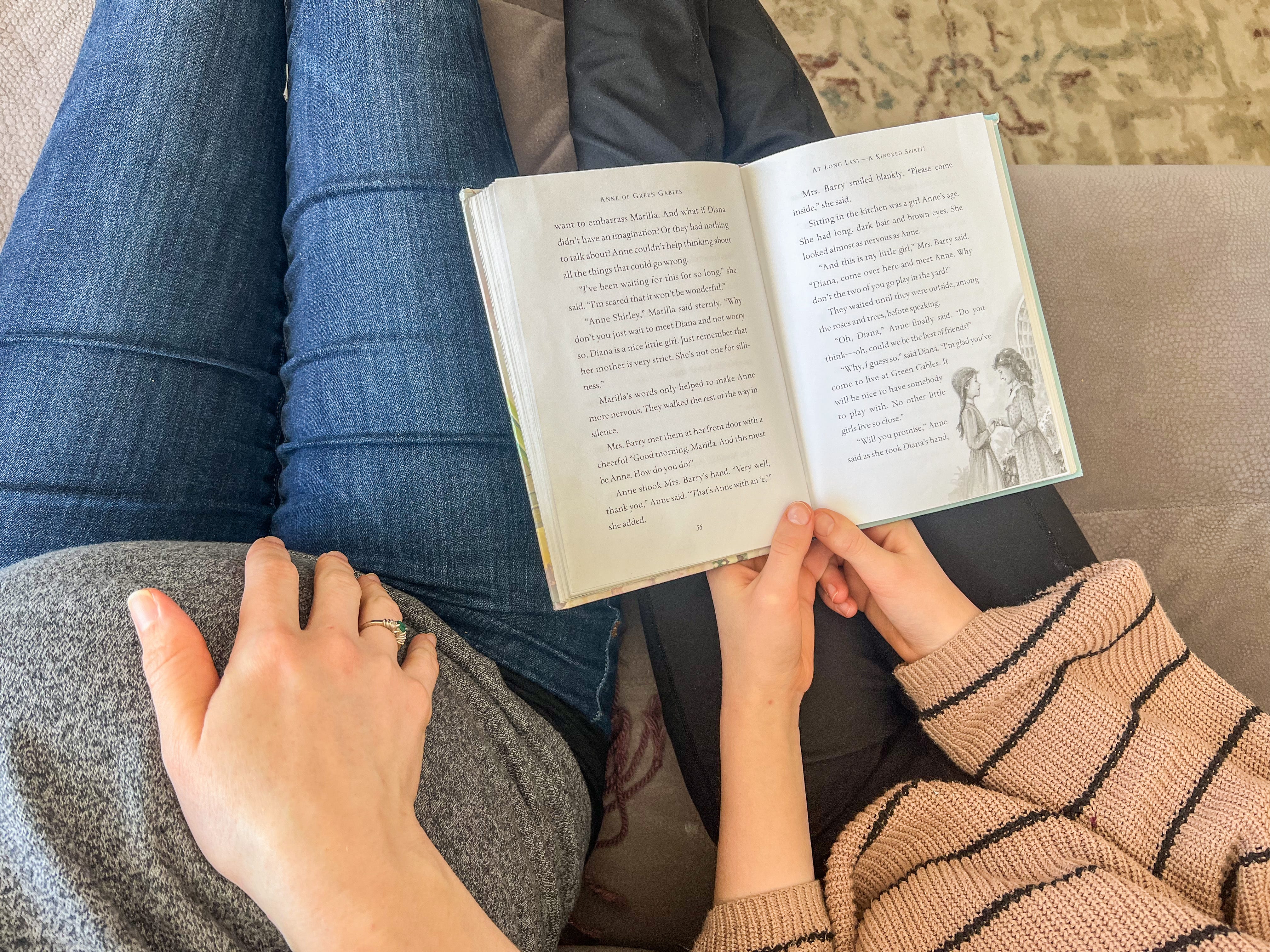
All three of my elementary-aged kids would tell you their favorite part of the school day is when I sit on the couch and read with them. It’s one of mine, too!
Each of my kids has a book they’re working through as part of their language arts curriculum, which means it’s at their instructional level— they can read it with about 90% accuracy, comprehend at least 60%, and still meet vocabulary words they haven’t learned yet.
At this level, kids benefit enormously from having you sit and read alongside them. Here’s what that looks like in our home…
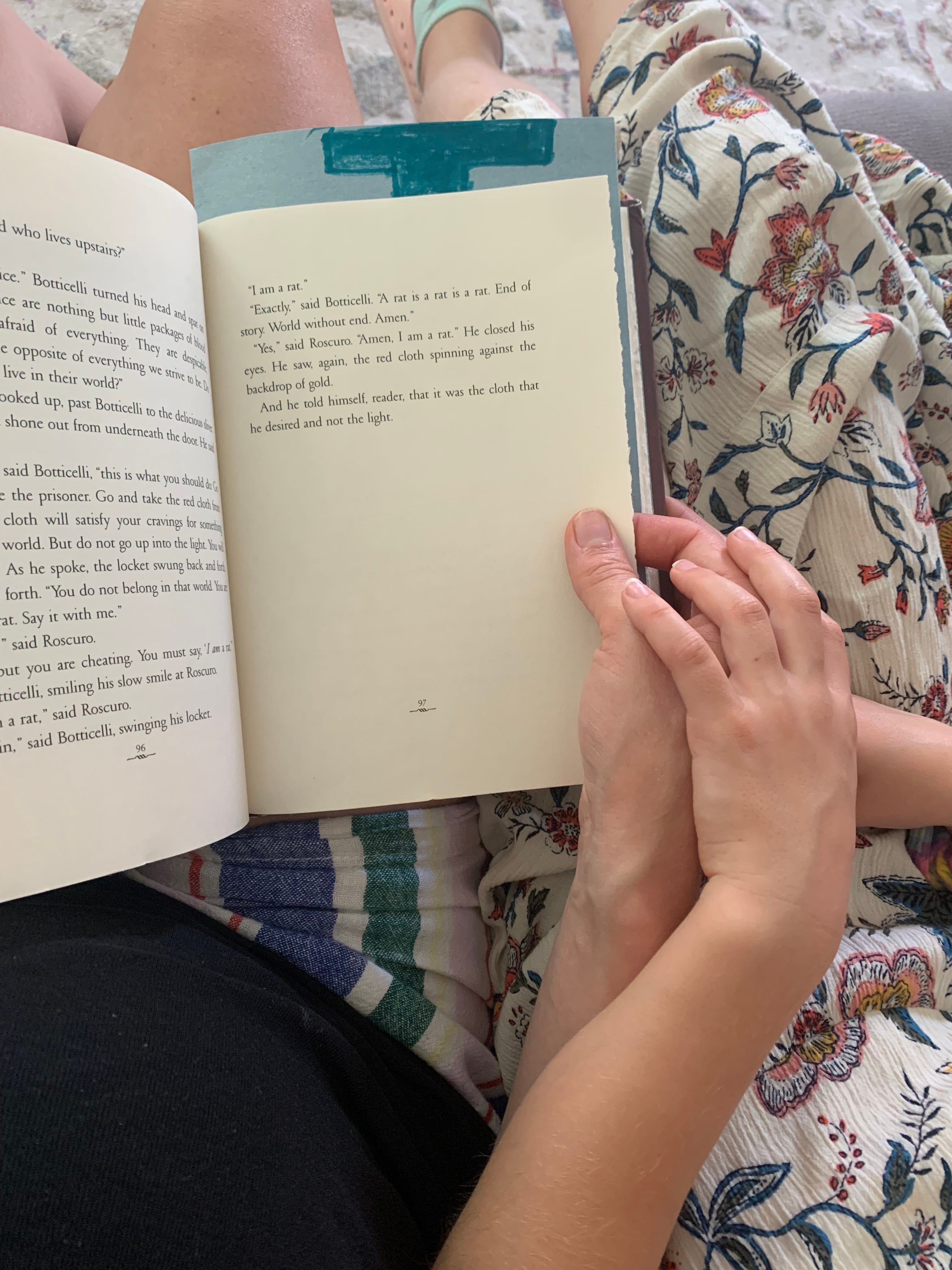
They bring their book to the couch. We sit close, usually snuggled with a blanket, and take turns. I read a page, they read a page, and so on. We talk as we go. I ask them about challenging vocabulary and help them sound out tricky words. They summarize and practice written and oral narration, many times answering a question in their notebook afterwards.
Most importantly, they get to read something harder than they could manage alone — without doing all the work themselves and feeling overwhelmed. It’s such a positive way to encourage kids toward great literature.
Some of our favorites from last year were Little Women, Anne of Green Gables, White Fang, The Chocolate Touch, and The Miraculous Journey of Edward Tulane.
You don’t need a certain curriculum for this, just choose a good book at your child’s instructional level and take turns reading!
3. Read Independently
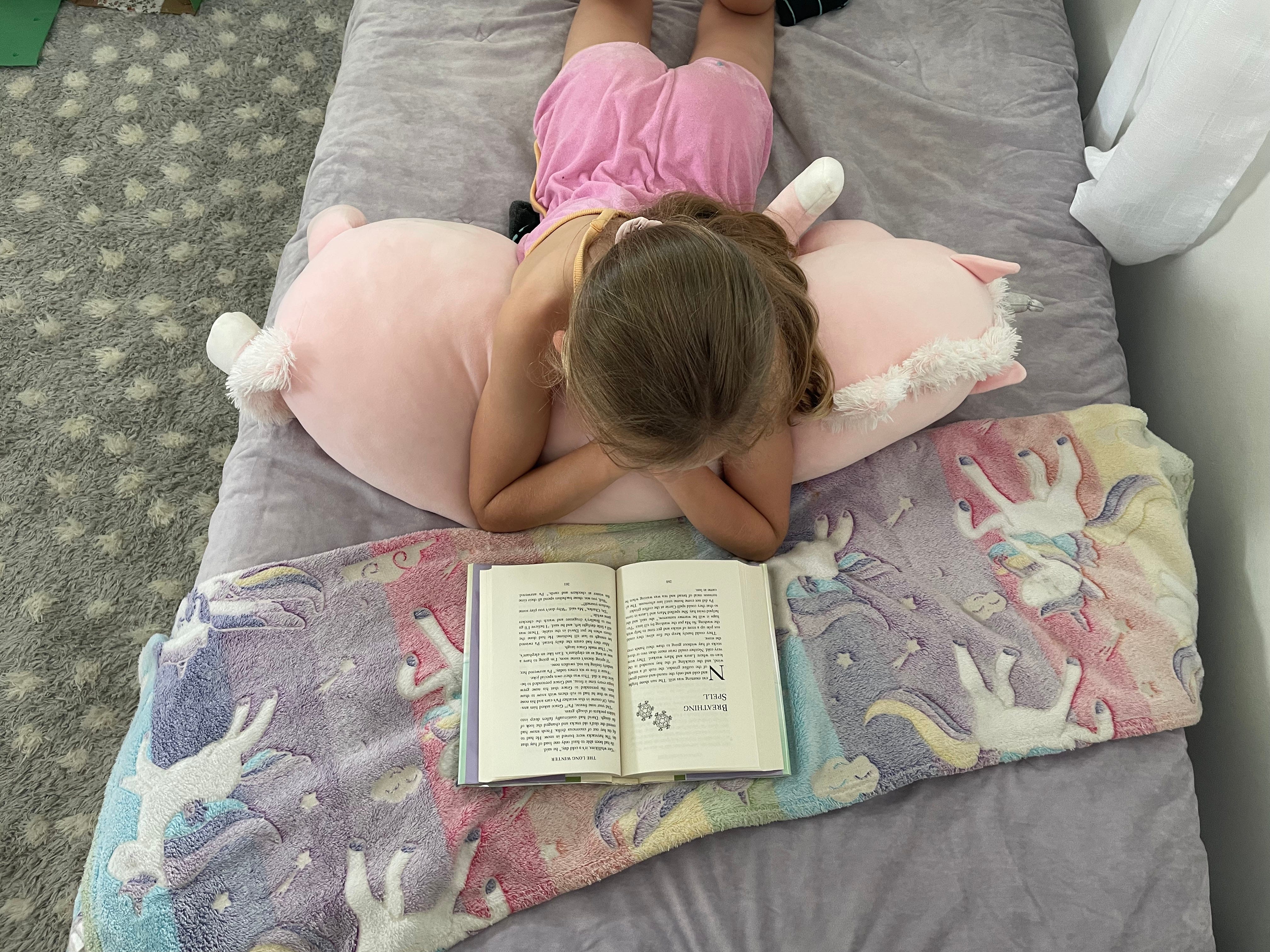
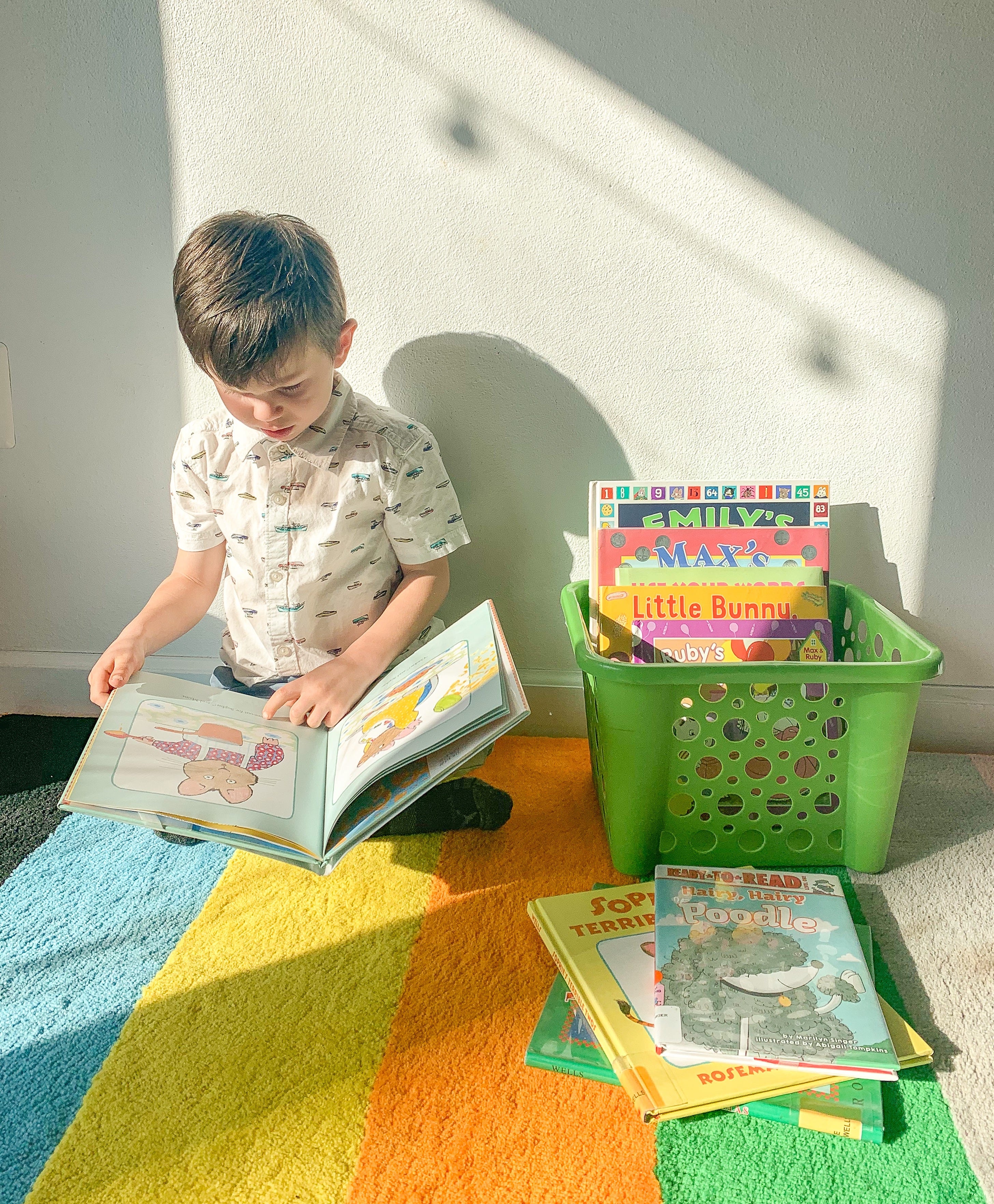
Teaching kids at a young age to build reading stamina by quietly looking at picture books is one of the best ways to grow a love of reading later. For my oldest kids, reading for 30 minutes is no problem — it’s something they look forward to. For the younger ones, keeping their own bin of books gives them a chance to read the pictures, even if they can’t read the words yet.
During our school morning, each of my kids reads independently for at least 30 minutes. They can take their book bin anywhere in the house and find a quiet spot. Then in the afternoon, we meet back in the school room for another 30 minutes during quiet time.
I don’t have strict rules about what they read (except no graphic novels, they can read those any other time). Just that they read the whole time, and that they find something enjoyable, even if it’s something they’ve read before.
This time lets them practice all the skills we work so hard to build during instruction. We make sure the books are a good fit– not too easy, but not so hard that reading and comprehending takes more effort than it’s worth.
The goal of independent reading isn’t to learn new skills or decode unknown words, it’s to enjoy the story. Finding books my kids are actually interested in is the best way to make them want to read on their own, so I’ll point them toward books I loved as a child or find interesting now, but the final choice is theirs.
It’s never too late to start
Over the years, I’ve relied less and less on tedious language arts curriculum and workbooks, and more on reading good literature — whether to my kids, with my kids, or letting them read on their own. So much more of our learning happens over a good book than over a textbook or another worksheet!
There are so many ways to teach your children, and I certainly haven’t mastered it. But I do know that when we’re reading quality literature in our home, our time is far better spent.
So if you don’t already read these three ways, it’s never too late to begin. Which of these three ways of reading do you already practice in your home? Which seems the hardest? I’d love to hear!
As always, thank you so much for being here and following along! I’ve been getting so many thoughtful comments and messages (both from friends I know in real-life as well as virtually on Substack) and that makes writing so much more meaningful! If this post was helpful to you, I’d love to hear and if you know a friend who might also enjoy it, send it along to them! Grateful for you being here.
With Love,
Mollie
Keep Reading…
If having your kids read independently is the part you can never seem to fit in, this one’s for you…

If you’re just starting out in a new homeschool year, you might find this one helpful…

If you’re curious how my homeschooling day as a mama of 5 looks right now, check this one out…

This is helpful! My oldest loves reading and reads all the time. My 2nd doesn’t like reading, so I’ve decided to read fun books with him/to him to help stir more of a love for reading… I hope!
I agree with all of these! We started all three when my kids were little and now with two high schoolers we still incorporate each of these most days. ❤️