


Choosing to stay home with your kids, whether you homeschool older kids or are home with preschoolers, is a gift many parents are privileged to have. But sometimes, these days feel endlessly long, tiring, and emotionally draining. Any other mamas agree?
Ever since my oldest daughter stopped napping around age 3, I’ve been determined to preserve the small window of peace and quiet I had each afternoon. Letting her run around the house and do whatever she wanted just wasn’t a healthy option — especially for me as an introvert who honestly craves a little alone time to feel like a better mom.
Over the years, as my children have ended their afternoon napping days and transitioned into quiet time, we’ve gone through room switch-ups, activity changes, and tweaks to our afternoon rhythm — yet it’s stayed rooted in consistency and a few key habits that keep it running strong.
If you’re a mom who feels completely exhausted by dinnertime and wonders how you can enjoy your days at home with kids even more, afternoon quiet time might be a game-changing habit that deserves a place in your home.
In this post, I’ll share 6 quiet time habits we use in our home with kids ages 11, 8, 6, 4, and 4 months that provide just the right balance of structure plus some peace and quiet each afternoon.
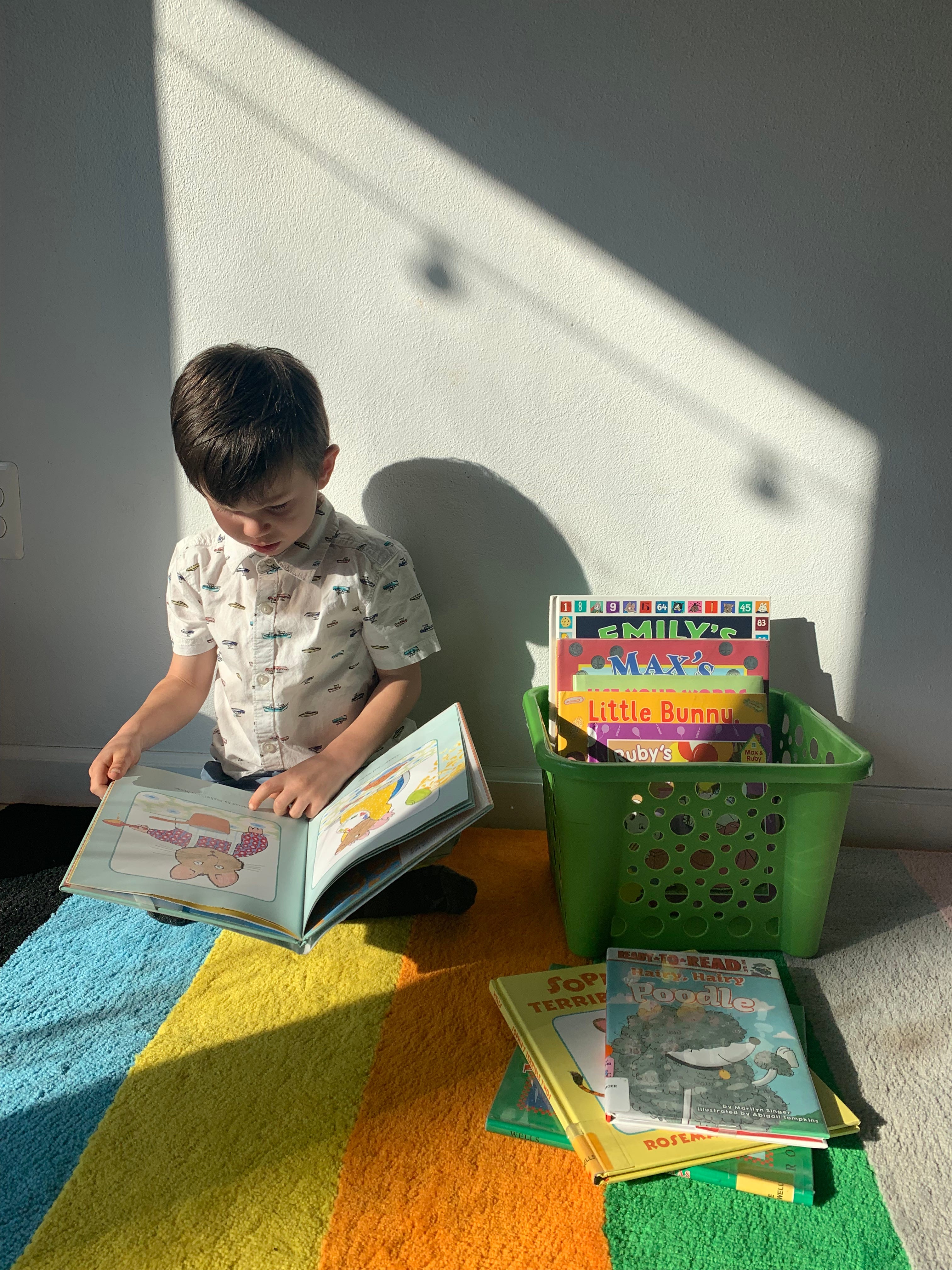
1. Read Together (But Separately)
Since beginning our homeschool journey, I’ve always had a quiet reading time for my kids — even before they could read a single word. We’d all gather in our homeschool room, set a timer (short enough for little kids to manage), gather our bins of books, play classical piano music, and read silently to ourselves.
We were together, but reading separately — a habit we still do today at the start of every afternoon quiet time.
Teaching kids at a very young age to build their reading stamina by quietly looking at picture books is one of the best ways to encourage a love of reading as they get older. For my oldest kids, reading for 30 minutes is no problem and something they look forward to. For younger kids, keeping their own bin of books that they enjoy gives them a chance to read the pictures, even if they can’t read the words.
2. Everyone Has Their Own Space
Many days, my kids beg to spend quiet time together, saying, “We’re having so much fun playing Legos together, can’t we please stay in the same room?!” And even though I’m all for encouraging positive sibling interactions, my answer is the same: “You may be getting along great right now, but that might not be the case in 30 minutes, so we’re going to take some time apart. When quiet time is over, you’ll be excited to play together again.”
We have to be flexible and creative with space in a smaller house where every child doesn’t have the luxury of his or her own bedroom. My two youngest kids still nap in their rooms, and my husband occupies our bedroom as his work-from-home office. So my oldest three kids, who do quiet time, rotate through the homeschool room, the basement, and the spare bedroom in the basement.
Each room has something to enjoy in it — one has the Lego table along with other toys, another has our large school table with markers and drawing supplies, and another has a keyboard for piano practice and space to be a little more active. Each week, we rotate rooms to mix things up and add a little more enjoyment to this time.
3. Keep Rules Simple But Firm
Our homeschool days are rooted in consistency (yet flexible enough to be enjoyable), so having a basic set of rules for afternoon quiet time is no different. The kids know what to expect, aren’t constantly pushing back, and can anticipate how long this time lasts.
I feel like a broken record, but every day after our 30 minutes of silent reading is over, I remind my kids of our quiet time rules — because simple rules gently stated over and over again create consistency, and consistency creates a habit.
Set the timer for 60 minutes.
Stay in your spot without coming out.
Keep your music and noises quiet.
Find something to occupy yourself for the whole time.
If these simple rules are followed, the kids are rewarded, which I’ll talk about below.
4. Kids Stay in Their Spaces the Whole Time
Not only does each child have their own space for quiet time, but the expectation is that they stay there the whole time. It’s not an eternity, just 60 minutes (which is no problem for my three oldest kids by now).
Nothing is more distracting when I’m trying to write, read, or relax than having multiple children scampering around the house asking me questions, gathering more art supplies, or wondering when they can end quiet time.
When our timers begin the countdown, we all stay in our designated quiet time locations and remain there until it’s over — a simple rule that makes a big difference!
5. When Time Is Up, Tidy Up Your Space
After the 60-minute timer goes off, spaces must be tidied before coming out of quiet time and grabbing a snack. This never takes more than a few minutes, but it changes the way our whole home feels by the end of the day.
6. A Good Quiet Time Is Rewarded
As mentioned above, if the kids stay in their spots for the full 60 minutes without complaining or wandering around the house, they get one of our coupons (they usually spend their coupons on Nintendo time on the weekends, but there are other ways to use them too).
Earning these coupons really motivates my kids, so there’s a big incentive to follow our quiet time rules.
Quiet time doesn’t always go seamlessly or without reminders of our rules, but with repetition, this daily habit has become one that makes a big difference in the time we spend together at home.
If your afternoons feel chaotic and as if they’re unraveling by 3pm, I’d encourage you to smart small with introducing quiet time to your daily rhythm and gradually working up to your desired length of time.
Then, determine each child’s quiet time space. Give them a timer (visual timers work great for preschoolers). Reinforce simple rules. Provide a few activities they can stay occupied with for the whole time. And after a few weeks, I think you’ll start to see why this habit has the potential to be a game-changer.
Thank you so much for following along! If you don’t already subscribe, I’d love to have you here. I write a mix of homeschooling and parenting articles, always with the goal of encouraging parents and providing tips and habits I’ve learned along the way!

Do you have a post on your coupon system
Giving kids quiet time in the afternoon pays dividends... my teens grew so much through that time and now can be really productive when alone because of the hobbies they picked up during "nap times." It's so worth it! There are some great tips here. My addition is that for a short season when they were transitioning from naps, I had toys in their rooms that they could only play with during nap. And there's no harm in stretching nap time to 1.5 or even 2 hours. :)